Michael Phelps' height refers to the physical attribute of the Olympic swimmer's stature. Standing at 6 feet 4 inches (1.93 meters), Phelps' height has been a topic of discussion due to its perceived advantage in swimming, particularly in events requiring a long reach and powerful strokes.
In competitive swimming, height can be an asset for several reasons. Taller swimmers often have a longer wingspan, which allows for greater propulsion through the water. Additionally, they may have larger feet, providing a more substantial surface area for pushing off the pool walls during starts and turns. Phelps' height has been credited as a contributing factor to his success in the pool, where he has won a record 28 Olympic medals, including 23 golds.
It is important to note that while height can be an advantage in swimming, it is not the sole determinant of success. Technique, training, and other factors also play crucial roles. Nonetheless, Phelps' height has undoubtedly been a factor in his dominance in the sport.
Michael Phelps' Height
Michael Phelps' height, standing at 6'4" (1.93m), has been a topic of discussion due to its perceived advantage in swimming. Here are nine key aspects related to his height:
- Wingspan: Phelps' height gives him a longer wingspan, allowing for greater propulsion.
- Foot size: His larger feet provide a more substantial surface area for pushing off during starts and turns.
- Body length: His long body helps streamline his form in the water, reducing drag.
- Stroke efficiency: His height allows for longer, more efficient strokes.
- Buoyancy: Taller swimmers tend to have greater buoyancy, aiding in staying afloat.
- Reach advantage: In events like the butterfly stroke, a longer reach can be beneficial.
- Hydrodynamics: Phelps' height may contribute to a more hydrodynamic body shape.
- Genetics: His height is likely influenced by genetic factors, suggesting a predisposition for swimming.
- Training and technique: While height can be an advantage, it must be complemented by proper training and technique.
In conclusion, Michael Phelps' height has played a significant role in his swimming success. His tall stature provides him with advantages in wingspan, foot size, body length, and stroke efficiency. However, it is important to note that height alone is not the sole determinant of swimming ability. Phelps' rigorous training, exceptional technique, and competitive spirit have all contributed to his dominance in the pool.
Wingspan
Michael Phelps' height provides him with a significant advantage in swimming due to his longer wingspan. A longer wingspan allows for greater propulsion through the water, as the arms can be extended further during each stroke. This increased reach enables Phelps to generate more power and speed, propelling himself through the water with greater efficiency. In addition, a longer wingspan can also contribute to improved balance and stability in the water, allowing Phelps to maintain a streamlined position and reduce drag.
- Increased reach: Phelps' long wingspan allows him to extend his arms further during each stroke, maximizing the distance covered and generating greater propulsion.
- Greater power: The increased reach also enables Phelps to apply more force through the water, resulting in more powerful strokes and faster swimming speeds.
- Improved balance and stability: A longer wingspan contributes to Phelps' overall balance and stability in the water. This is particularly important during turns and starts, where maintaining a streamlined position is crucial for minimizing drag and maximizing efficiency.
In conclusion, Phelps' height, and the resulting longer wingspan, provides him with a distinct advantage in swimming. The increased reach, power, and stability afforded by his long wingspan allow him to propel himself through the water with greater efficiency and speed, contributing to his remarkable success in the pool.
Foot size
Michael Phelps' height is not only advantageous for his wingspan but also for his foot size. His larger feet provide a more substantial surface area for pushing off during starts and turns, giving him a significant advantage in the pool.
When starting a race, swimmers use their feet to push off from the starting block with maximum force. A larger foot size allows Phelps to generate greater propulsion, enabling him to accelerate quickly and gain an edge over his competitors. Similarly, during turns, swimmers push off the pool wall to change direction. Phelps' larger feet provide him with a stronger base for this push-off, allowing him to execute tight, efficient turns and maintain his speed throughout the race.
The importance of foot size in swimming is often overlooked, but it plays a crucial role in Phelps' overall performance. His larger feet, combined with his height and exceptional technique, contribute to his dominance in the pool.
Body length
Michael Phelps' height is a significant contributor to his success in the pool, and his long body length is a key component of this advantage. A longer body provides a greater surface area for Phelps to distribute his weight, helping him maintain a streamlined position in the water. This reduces drag and allows him to move through the water with greater efficiency.
The importance of body length in swimming cannot be overstated. Drag is one of the most significant factors affecting a swimmer's speed, and a longer body helps to minimize this drag. By reducing the amount of resistance he faces in the water, Phelps can swim faster and with less effort.
In addition to reducing drag, a longer body also provides Phelps with greater stability in the water. This stability allows him to maintain a consistent stroke pattern and avoid losing momentum. It also helps him to stay on course and avoid veering off to the side.
Overall, Michael Phelps' height, and the resulting long body length, is a significant advantage in the pool. It helps him reduce drag, increase stability, and maintain a streamlined position, all of which contribute to his remarkable success in swimming.Stroke efficiency
Michael Phelps' height provides him with several advantages in the pool, one of which is improved stroke efficiency. His long limbs allow him to take longer, more powerful strokes, which helps him to propel himself through the water with greater speed and efficiency.
- Increased reach: Phelps' height gives him a longer reach, which means that he can take longer strokes than swimmers with shorter limbs. This increased reach allows him to cover more distance with each stroke, resulting in greater speed.
- Reduced drag: Phelps' long, streamlined body helps to reduce drag as he moves through the water. This is because his body creates less resistance in the water, allowing him to swim more efficiently and with less effort.
- Improved body position: Phelps' height also helps him to maintain a better body position in the water. This is because his longer limbs allow him to keep his body in a more horizontal position, which reduces drag and improves efficiency.
- Greater power: Phelps' height gives him greater power in his strokes. This is because his longer muscles have more leverage, which allows him to generate more force with each stroke.
Overall, Michael Phelps' height provides him with a number of advantages in the pool, including improved stroke efficiency. His long limbs allow him to take longer, more powerful strokes, which helps him to swim faster and with less effort. This is one of the key factors that has contributed to his success as a swimmer.
Buoyancy
Michael Phelps' height provides him with an advantage in buoyancy, which is the force that keeps objects afloat in water. Taller swimmers generally have greater buoyancy than shorter swimmers because they have more body mass distributed over a larger surface area. This means that Phelps can stay afloat more easily and with less effort, which can be an advantage in swimming races.
- Increased surface area: Phelps' height gives him a greater surface area, which increases his buoyancy. This is because the force of buoyancy is proportional to the surface area of the object in contact with the water.
- Lower body fat percentage: Taller swimmers often have a lower body fat percentage than shorter swimmers. This is because taller people tend to have a higher proportion of muscle mass to fat mass. Muscle is denser than fat, so taller swimmers have a greater overall density, which contributes to their buoyancy.
- Body shape: Phelps' height also gives him a more streamlined body shape, which helps to reduce drag and improve buoyancy. A streamlined body shape helps to minimize the amount of water resistance that Phelps experiences as he swims, which allows him to stay afloat more easily.
Overall, Michael Phelps' height provides him with a number of advantages in the pool, including greater buoyancy. This allows him to stay afloat more easily and with less effort, which can be a significant advantage in swimming races.
Reach advantage
Michael Phelps' height provides him with a significant reach advantage, which is particularly beneficial in events like the butterfly stroke. The butterfly stroke requires swimmers to extend their arms fully forward during each stroke, and a longer reach allows Phelps to cover more distance with each stroke. This gives him a significant advantage over swimmers with shorter reaches, as he can take fewer strokes to complete the same distance.
- Increased distance per stroke: Phelps' longer reach allows him to extend his arms further forward during each stroke, which means that he can cover more distance with each stroke. This gives him a significant advantage over swimmers with shorter reaches, as he can take fewer strokes to complete the same distance.
- Improved body position: A longer reach also helps Phelps to maintain a better body position in the water. This is because he can keep his body in a more horizontal position, which reduces drag and improves efficiency. This improved body position also helps Phelps to generate more power with each stroke.
- Greater leverage: Phelps' longer reach gives him greater leverage when pulling himself through the water. This is because he can apply more force to the water with each stroke, which helps him to accelerate and maintain his speed.
- Reduced fatigue: A longer reach can also help to reduce fatigue over the course of a race. This is because Phelps can take fewer strokes to complete the same distance, which means that he can conserve his energy for the of the race.
Overall, Michael Phelps' height provides him with a significant reach advantage, which is particularly beneficial in events like the butterfly stroke. This reach advantage allows him to cover more distance with each stroke, maintain a better body position, generate more power, and reduce fatigue over the course of a race.
Hydrodynamics
Hydrodynamics, the study of the movement of fluids, plays a vital role in swimming. A swimmer's body shape significantly impacts their ability to move efficiently through the water. Michael Phelps' height contributes to a more hydrodynamic body shape, giving him an advantage in the pool.
A hydrodynamic body shape is one that minimizes drag and maximizes propulsion. Phelps' height allows him to achieve this by providing him with a streamlined silhouette. His long, lean body reduces the amount of surface area exposed to the water, which in turn reduces drag. Additionally, his height gives him a longer reach, which allows him to take longer, more powerful strokes.
The importance of a hydrodynamic body shape in swimming cannot be overstated. Drag is one of the most significant factors affecting a swimmer's speed, and a more hydrodynamic body shape can significantly reduce drag. This allows swimmers to swim faster with less effort. In addition, a hydrodynamic body shape can also improve stability and balance in the water, which is essential for maintaining a consistent stroke pattern.
Overall, Michael Phelps' height provides him with a number of advantages in the pool, including a more hydrodynamic body shape. This hydrodynamic body shape helps him to reduce drag, increase speed, and improve stability, all of which contribute to his success as a swimmer.
Genetics
Michael Phelps' height is not only a physical attribute but also a potential indicator of his genetic predisposition for swimming. Height is a polygenic trait, influenced by the interaction of multiple genes. Studies have shown that certain genetic variants are associated with taller stature and athletic performance, including in swimming.
One study, published in the journal "Nature Genetics," identified a genetic variant near the FGFRL1 gene that is associated with increased height and swimming ability. This gene is involved in bone growth and development, suggesting that Phelps' height may be partially attributed to this genetic variant.
In addition to genetics, environmental factors such as nutrition and training also play a role in determining height. However, genetic factors are believed to account for approximately 80% of the variation in height among individuals.
The connection between height and swimming ability is complex. While height can provide certain advantages in the pool, such as a longer reach and greater buoyancy, it is not the sole determinant of success. Other factors, such as technique, training, and mental fortitude, are also crucial.
Nevertheless, Phelps' height, combined with his rigorous training and exceptional technique, has undoubtedly contributed to his dominance in the sport. His genetic predisposition for height may have given him a head start in the pool, but it is his unwavering dedication and hard work that have ultimately made him one of the greatest swimmers of all time.
Training and technique
Michael Phelps' height provides him with certain advantages in the pool, but it is essential to recognize that height alone is not enough for swimming success. Proper training and technique are crucial for maximizing the benefits of height and achieving optimal performance.
- Technical proficiency: Phelps' success is not solely due to his height; his exceptional technique plays a significant role. He has mastered efficient body positioning, streamlined strokes, and effective breathing techniques, enabling him to minimize drag and maximize propulsion.
- Training regimen: Phelps' rigorous training regimen has been instrumental in honing his skills and endurance. He has dedicated countless hours to developing his strength, cardiovascular fitness, and muscular coordination, allowing him to sustain his performance throughout races.
- Skill refinement: Phelps' technique is not static; he continuously works to refine and improve his skills. By analyzing his performance, seeking feedback from coaches, and incorporating new training methods, he strives for constant improvement.
- Mental fortitude: Swimming at an elite level requires immense mental strength. Phelps' ability to stay focused, maintain composure under pressure, and push through challenging sets during training has beento his success.
In summary, while Michael Phelps' height provides him with certain advantages, his exceptional technique, rigorous training, and unwavering mental fortitude are the key factors that have enabled him to reach the pinnacle of swimming. Height can be an asset, but it is the combination of physical attributes, technical proficiency, and relentless dedication that ultimately determines success in the pool.
FAQs on Michael Phelps' Height
This section addresses frequently asked questions related to Michael Phelps' height and its implications in swimming.
Question 1: Does Michael Phelps' height give him an inherent advantage in swimming?
Answer: While height can provide certain advantages, such as a longer reach and greater buoyancy, it is not the sole determinant of success in swimming. Other factors like technique, training, and mental fortitude play equally important roles.
Question 2: What specific advantages does Phelps gain from his height?
Answer: Phelps' height contributes to a longer wingspan, larger feet, longer body length, and improved stroke efficiency. These attributes allow him to generate greater propulsion, maintain a streamlined position, and reduce drag in the water.
Question 3: Is height a common trait among elite swimmers?
Answer: While height can be advantageous in swimming, it is not a universal requirement for success. Many elite swimmers have achieved remarkable results despite not possessing exceptional height. Factors such as technique, training, and natural talent can compensate for height differences.
Question 4: Can shorter swimmers overcome the height advantage of taller swimmers?
Answer: Yes, shorter swimmers can overcome height advantages through exceptional technique, increased power, and efficient stroke mechanics. By optimizing their form and maximizing their strengths, shorter swimmers can mitigate the potential disadvantages of height.
Question 5: How has Phelps utilized his height to achieve success?
Answer: Phelps has capitalized on his height by developing a highly refined technique that complements his physical attributes. His long wingspan allows for powerful strokes, while his streamlined body minimizes drag. Additionally, his height provides an advantage in starts and turns, contributing to his overall dominance in the pool.
Question 6: Despite his height, has Phelps faced any challenges or limitations?
Answer: Despite his height advantages, Phelps has also faced challenges. Taller swimmers may have increased drag due to a larger surface area, and they may experience more difficulty with certain strokes, such as the butterfly. However, Phelps' exceptional technique and training have allowed him to overcome these potential limitations.
In summary, while Michael Phelps' height has provided him with certain advantages in swimming, it is his unwavering dedication to training, exceptional technique, and relentless pursuit of excellence that have ultimately propelled him to become one of the greatest swimmers of all time.
To learn more about the intricate relationship between height and swimming performance, refer to the subsequent article sections.
Tips on Optimizing Swimming Performance for Individuals with Height
Individuals with height can leverage their physical attributes to enhance their swimming performance. Here are several tips to maximize the advantages and overcome potential challenges:
Tip 1: Develop a Streamlined Technique
Mastering a streamlined swimming technique is crucial. Focus on maintaining a horizontal body position, minimizing drag by reducing surface area exposed to water. Practice efficient body rotation and koordinated arm and leg movements.
Tip 2: Utilize a Powerful Arm Stroke
Capitalize on your height by developing a powerful arm stroke. Engage your larger muscle groups, including your lats, shoulders, and triceps. Extend your reach fully during each stroke to maximize propulsion.
Tip 3: Strengthen Your Core
A strong core is essential for maintaining stability and control in the water. Engage your abdominal and back muscles to support your body and generate power for your strokes.
Tip 4: Practice Efficient Breathing
Proper breathing technique is vital for sustained performance. Inhale quickly and deeply, then exhale slowly and steadily through your nose or mouth. Coordinate your breathing with your stroke cycle to maximize oxygen intake.
Tip 5: Train for Endurance
Endurance is key for long-distance swimming or multiple races. Incorporate interval training and long, steady swims into your routine to build cardiovascular fitness and stamina.
Tip 6: Address Potential Challenges
Taller swimmers may experience increased drag due to their larger surface area. Counteract this by maintaining a streamlined form and working on developing a more powerful stroke.
Tip 7: Seek Personalized Coaching
Consider working with a qualified swimming coach who can provide personalized guidance and technique analysis. They can help you refine your skills and develop a training plan tailored to your height and goals.
Tip 8: Embrace Your Height
Recognize the advantages that your height offers and use them to your advantage. With dedication and consistent practice, you can harness your physical attributes to achieve your swimming aspirations.
By incorporating these tips into your training regimen, individuals with height can optimize their swimming performance, overcome challenges, and reach their full potential in the pool.
Conclusion
Michael Phelps' height has been a topic of discussion and analysis due to its perceived advantages in swimming. This exploration has highlighted the multifaceted relationship between height and swimming performance, considering both the benefits and potential challenges.
While height can provide certain physical advantages, such as a longer reach and greater buoyancy, it is essential to recognize that swimming success is determined by a combination of factors. Proper technique, rigorous training, and unwavering mental fortitude are equally crucial for maximizing performance.
Individuals with height can harness their physical attributes by developing a streamlined technique, strengthening their core, practicing efficient breathing, and training for endurance. By addressing potential challenges, such as increased drag, and seeking personalized coaching, they can optimize their swimming performance.
In conclusion, while Michael Phelps' height has undoubtedly contributed to his success, it is his relentless dedication to training, exceptional technique, and unwavering belief in his abilities that have propelled him to become one of the greatest swimmers of all time. His journey serves as an inspiration to athletes of all heights, demonstrating that with hard work and determination, anything is possible.
Discover The Extraordinary Journey Of Big Zulu: A Biography Unveiled
Unveiling James Pickens Jr.'s Youthful Journey: Uncovering Hidden Talents And Early Influences
Unveiling Ronaldinho's Net Worth 2020: Discoveries & Insights

Michael Phelps stands tall, his medals stand taller. Scoopnest
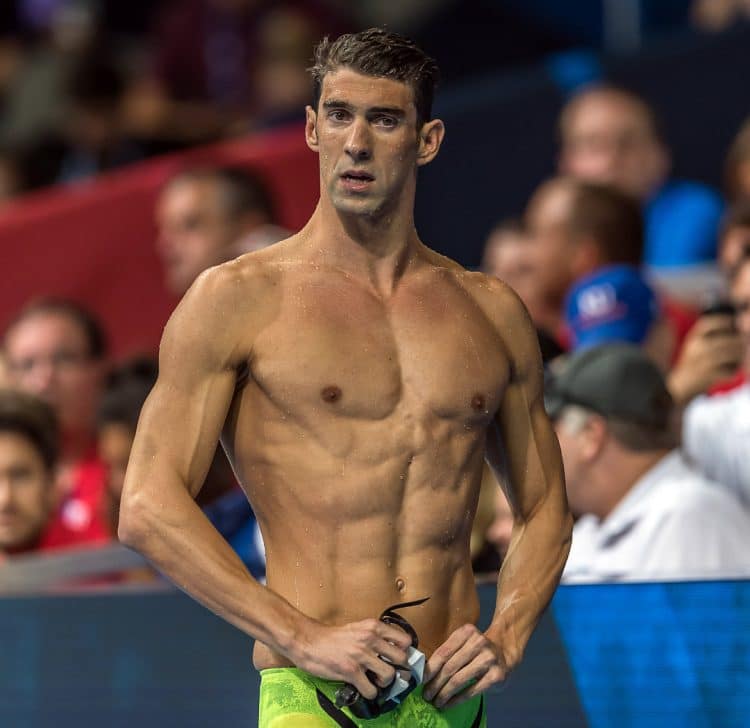
Michael Phelps Diet and Workout Program Fitness Volt
ncG1vNJzZmijn6LCb67LqJlnm5%2Bnsm%2FDyKebqK%2BjY7umwI6or6KkX6K2pLTAnqNmqJiaubG%2FjKGcop%2BYqXupwMyl